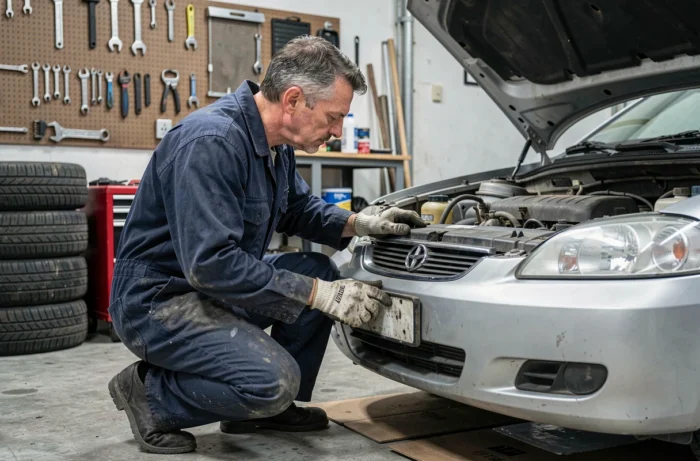
Maintaining a car starts with understanding which operations truly protect the mechanics and bodywork, and which ones are merely cosmetic gestures. The idGarages barometer published in July 2026 reports an average increase of 8.70% in the cost of car repairs over one year. This inflation changes the game: every preventive maintenance action skipped today will cost more tomorrow in workshop bills.
Cost of car repair in 2026: why preventive maintenance becomes profitable
The price increase does not affect all operations in the same way. The clutch, timing belt, and front brakes are among the interventions whose costs have risen faster than average. These so-called “deep” repairs represent amounts that alone justify a rigorous follow-up of the maintenance log.
At the same time, the maintenance and repair sector is experiencing an increase in business failures in the second quarter of 2026, according to the Journal de l’Automobile. In practical terms, the network of independent workshops is weakening. Finding an available garage quickly becomes less guaranteed, especially in rural areas. Anticipating routine operations helps avoid emergencies and choose your service provider.
Car enthusiasts who wish to deepen their technical knowledge can find detailed resources on passionautomeca.fr, which helps in better communicating with a professional or performing certain tasks themselves.
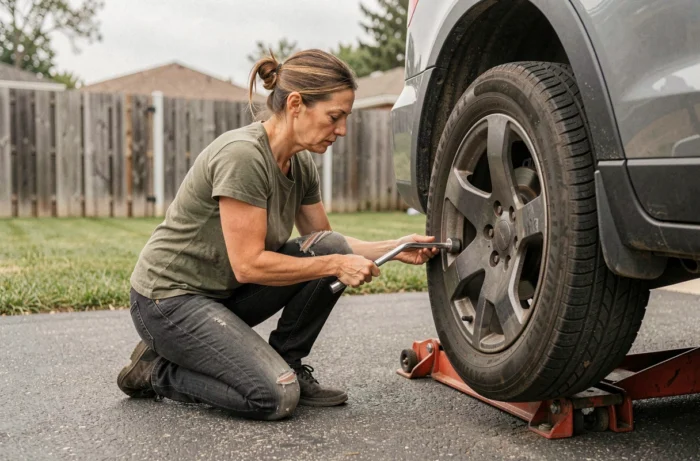
Checking levels and filters: technical gestures that change the vehicle’s longevity
Checking the levels (engine oil, coolant, brake fluid, power steering) takes only a few minutes. Doing it regularly, with a cold engine, on flat ground, provides reliable measurements. An oil level that is too low accelerates internal engine wear irreversibly.
The air filter is often neglected. When it is clogged, the engine compensates by consuming more fuel. Replacing it according to manufacturer recommendations maintains a correct air-fuel mixture and preserves consumption.
Oil filter and cabin filter
The oil filter is changed at every oil change. Reusing a used filter partially negates the benefits of new oil, as metal particles trapped in the old filter recontaminate the circuit.
The cabin filter does not affect the mechanics but the quality of the air breathed inside the vehicle. Its replacement is simple, accessible without specific tools on most models, and inexpensive.
- Engine oil: check every two weeks, top up with the viscosity index indicated in the maintenance log
- Coolant: check the level between the min and max markers on the expansion tank, with a cold engine
- Brake fluid: a level that regularly drops may indicate a leak or advanced wear of the pads
- Air filter: visually inspect every few months, replace as soon as it appears gray or clogged
Bodywork maintenance and paint protection: beyond washing
Competing guides extensively detail the two-bucket technique and the choice of microfiber cloth. These basics are useful, but paint protection starts before washing. Parking in the shade, quickly removing bird droppings or tree resin, avoiding automatic wash rollers that create micro-scratches: these reflexes matter more than the choice of shampoo.
Superficial scratches, those that cannot be felt with a nail, can be treated with an appropriate polish. A fine abrasive polish removes a microscopic layer of varnish to even out the surface. The operation works, but it has a physical limit: each polishing thins the varnish, and a layer of varnish does not regenerate.
When to apply wax or ceramic treatment
Carnauba wax provides a shiny finish and hydrophobic protection for a few weeks. The ceramic treatment, more durable, creates a protective layer that withstands chemical aggression (de-icing salt, pollution, UV) for several months.
The choice between the two depends on how often the vehicle is exposed to the elements. A vehicle parked outside all year benefits more from a ceramic treatment. A vehicle parked in a basement can suffice with wax applied two to three times a year.
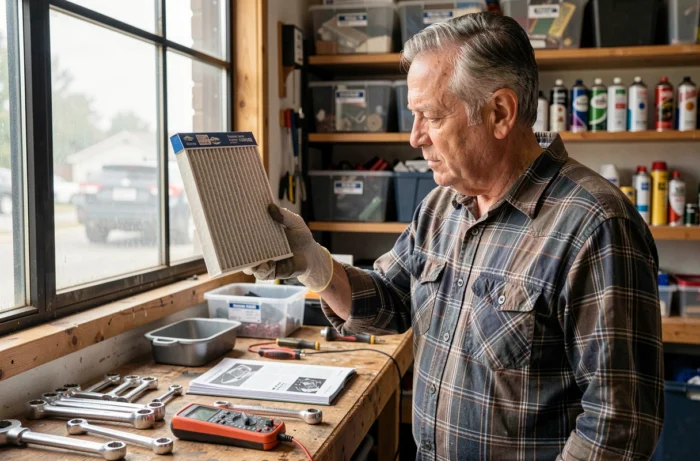
Wear parts and timing belt: anticipate before breakdown
Brake pads, discs, shock absorbers, tires: these wear parts gradually degrade. Their replacement is predictable if manufacturer intervals are respected and attention is paid to signals (metallic noise when braking, vibrations in the steering wheel, uneven tire wear).
The timing belt deserves special attention. Its failure often leads to engine damage, the repair of which costs much more than preventive replacement. Manufacturer recommendations indicate an interval in kilometers and years: it is the first of the two limits reached that dictates the change.
- Brake pads: a residual thickness that is too low causes metal-to-metal contact that damages the disc
- Tires: the minimum legal tread depth is 1.6 mm, but handling deteriorates well before this threshold
- Shock absorbers: their wear increases braking distance and destabilizes the vehicle in curves
The marked increase in the cost of heavy interventions, with timing and clutch at the forefront, reinforces the interest in planning these replacements rather than enduring them. A well-maintained maintenance log, even digital, remains the best tool to avoid forgetting anything and preserve the resale value of the vehicle.