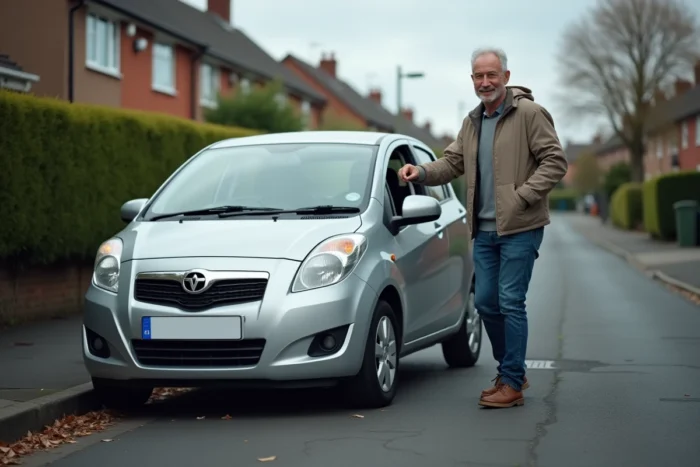
Driving every day with a 90 hp car is the daily routine for millions of motorists in France. This power level equips most city cars and compacts sold on the market. However, the question deserves to be asked: is 90 hp really enough for commuting, weekend shopping, and vacation trips, or do you end up regretting this choice at the first loaded incline?
Intermediate accelerations: the real test of a 90 hp engine in everyday life
Technical specifications highlight the 0 to 100 km/h figure. This number fascinates, but it almost never reflects real driving. You rarely start from a complete stop to reach 100 km/h on an open straight road.
What matters in daily life are the intermediate accelerations. Overtaking a heavy truck on a departmental road requires going from 70 to 110 km/h in a few seconds. Merging onto a fast lane from a short ramp demands a strong acceleration between 50 and 90 km/h. It is in these phases that engine torque matters more than maximum power.
A well-matched 90 hp engine at low revs (typically a small petrol turbo or a diesel) handles these situations effortlessly. An atmospheric 90 hp engine, on the other hand, may seem more sluggish because its torque arrives higher in the rev range. Raw power doesn’t tell the whole story: the type of engine and the torque curve radically change the driving experience.
When considering the power of a 90 hp car, it’s essential to look beyond just the number displayed on the registration certificate and understand how this power is distributed across common driving regimes.

Fuel consumption and operating costs of a 90 hp car
You may have noticed that smaller engines are not always the most economical? An undersized engine relative to the vehicle’s weight often runs at high revs more frequently, which increases fuel consumption.
With 90 hp, the power-to-weight ratio remains favorable for a city car or a lightweight compact. The fuel consumption in mixed cycle remains contained for this segment, provided you don’t drive consistently at full load.
Vehicle weight and real efficiency
A 90 hp city car weighing just over a ton utilizes its power effectively. In contrast, putting the same engine in a compact SUV approaching 1,400 kg makes the engine work much harder. Fuel consumption rises, driving pleasure decreases, and mechanical wear accelerates.
Before validating a 90 hp model, check the power-to-weight ratio. It is a much more reliable indicator than power alone:
- Less than 12 kg per horsepower: smooth driving, adequate accelerations, controlled consumption on all daily trips
- Between 12 and 15 kg per horsepower: comfortable urban and suburban use, but long highway trips or loaded climbs require patience
- More than 15 kg per horsepower: the engine is regularly pushed to its limits, which degrades comfort and longevity
Ecological tax and taxation in 2025-2026
The regulatory context increasingly influences the choice of engine. The ecological tax was revised in 2025, with a logic that favors low CO₂ emission vehicles. A 90 hp thermal engine is not exempt from this grid if its emissions exceed the threshold set by the scale.
The fuel aid implemented since 2025, targeted at low-income households, does not compensate for the lasting increase in the operating costs of thermal vehicles. This economic pressure even affects reasonably powered engines.
Driver profiles for whom 90 hp is sufficient (or not)
The right power depends less on the number on the sheet than on how you use your car. Here are the most common scenarios.
For a commute of less than 50 km, primarily urban or suburban, 90 hp more than meets the need. Acceleration phases are short, speeds are moderate, and the engine operates within its optimal range.
For a young driver, this power level offers a good compromise between driving pleasure and control. Insurance is also significantly cheaper than for a more powerful vehicle.
However, certain uses put the 90 hp under strain:
- Frequent highway trips at a stabilized speed of 130 km/h, where the engine runs high constantly and the power reserve for overtaking diminishes
- Regular transport of heavy loads (trailer, full trunk for five passengers, bikes on a hitch) that weighs the vehicle well beyond its empty weight
- Mountainous areas with significant elevation changes, where the lack of torque is felt on long inclines
Hybrid and electric alternatives around 90 hp
The market has changed significantly in recent years. Several electric city cars boast a power equivalent to 90 hp, with a fundamental difference: an electric motor delivers all its torque from the start. The accelerations are immediate, with no turbo lag or gear shifting.
In practice, a 90 hp electric car provides a feeling of greater liveliness than its thermal equivalent. Acceleration in the city and on fast lanes is sharper, even if the top speed remains comparable.
The overall cost changes the game
The purchase price of an electric city car remains higher, but the cost per kilometer (energy, reduced maintenance, favorable taxation) can reverse the equation over a few years. For daily use of short and medium trips, an electric car around 90 hp represents a credible alternative to thermal.
The choice between thermal and electric at equal power is no longer just a question of initial budget. It now includes taxation, energy costs, maintenance, and local regulations on low emission zones.
A 90 hp car remains a relevant choice for the majority of drivers in daily life, provided you check that the weight of the targeted vehicle does not negate this power. The real decision criterion is not the number of horsepower, but how they are utilized by the engine in the situations you encounter every day.