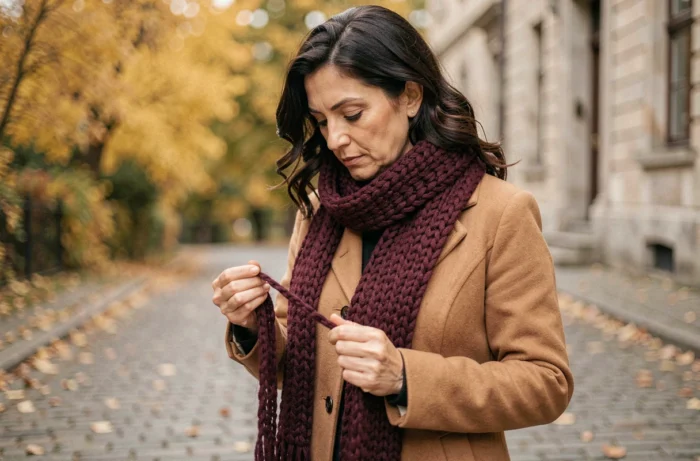
Knitting a scarf by hand involves making several technical decisions even before casting on the first stitches. Among them, the choice of dimensions affects both the comfort of wearing it and the amount of yarn needed. Recommendations vary by source, and there is no universal standard for the length or width of a knitted scarf. The final result depends on the yarn, the stitch used, the person’s body shape, and the intended use.
Yarn thickness and knitting stitch: what affects the actual dimensions
Two scarves knitted to the same dimensions in centimeters can yield radically different results. A thick yarn produces a dense and voluminous knit, while a fine yarn offers a soft and light drape. This parameter directly influences the perceived width once the scarf is worn.
With a bulky yarn knitted in garter stitch, a width of 20 cm is often enough to cover the neck without creating excess under a coat. The same pattern made with a fine yarn in tight stitches will yield a flat, almost transparent scarf that will require more width to serve the same purpose.
Choosing the ideal dimensions for a women’s knitted scarf therefore involves testing a sample before getting started, by knitting a square of about ten centimeters with the intended yarn and needles. This sample allows you to check if the result matches the envisioned scarf and to adjust the number of stitches accordingly.
The choice of stitch also modifies the final width. Garter stitch tends to widen slightly when blocked, while stockinette stitch curls in on itself, reducing the visible surface. A rib stitch remains stable but consumes more yarn for the same apparent width. These variations are not trivial: they can represent several centimeters of difference in the finished piece.
Length of women’s scarf: adapting centimeters to actual use
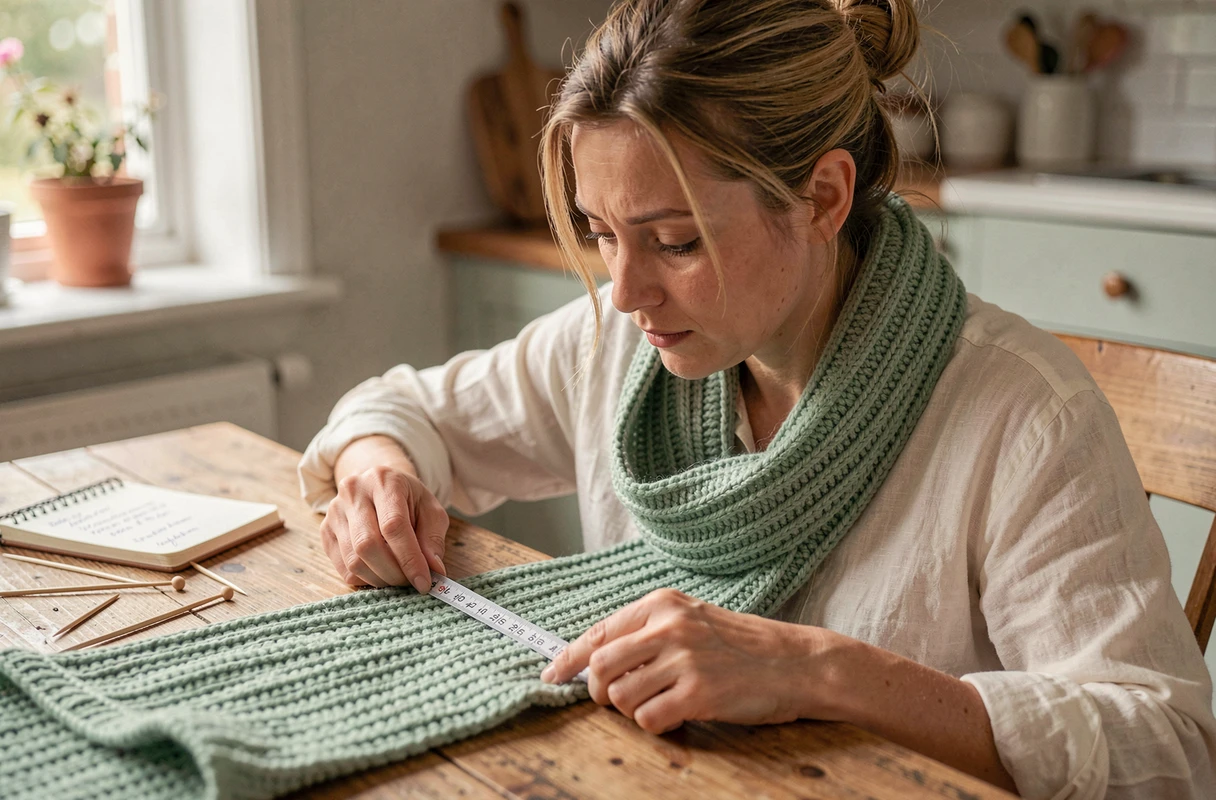
Most guides recommend a length between 160 and 180 cm for a scarf that allows a simple wrap around the neck with a loose knot. This range suits the majority of female body shapes, but it deserves to be nuanced according to the intended wearing style.
A scarf worn knotted under a coat does not need to exceed 150 cm. Conversely, a scarf intended to be wrapped multiple times or left hanging in front requires at least 180 cm, sometimes more. Field feedback varies on this point: some knitters prefer long and thin pieces that they drape freely, while others favor shorter and wider models that stay in place without tying.
A simple method to estimate the right length is to spread the arms in a cross. The distance between the two hands provides a reliable reference for a versatile scarf. This approach naturally adapts to each person’s stature.
The trap of volume under the collar
People who frequently alternate between indoors and outdoors should limit the volume of their scarf. A model that is too wide or too long, worn under a closed jacket, creates an uncomfortable bulge at the neck or chest.
A width around 30 cm remains a good compromise between coverage and discretion. Beyond that, the scarf shifts into the territory of a shawl, with a different behavior when worn.
Width of knitted scarf: concrete benchmarks by project type
The width determines the overall look of the scarf and its ease of tying. Here are the benchmarks that come up in feedback from experienced knitters:
- Thin and discreet scarf (worn under a coat): about 15 cm wide. Quick to knit, it uses little yarn and slips easily under a collar without adding volume.
- Classic versatile scarf: between 20 and 30 cm. This range allows for the most different knots while remaining comfortable. Garter stitch or ribbing work well in this width.
- Scarf-shawl or rectangular shawl: over 35 cm. This format covers the shoulders and can be worn as both a clothing accessory and protection against the cold. It requires significantly more wool and time to create.
The number of stitches to cast on directly depends on the thickness of the yarn and the needles. With a medium yarn and size 5 or 6 needles, a row of 30 to 40 stitches generally produces a width between 20 and 25 cm. Again, only the sample can confirm this.
Amount of yarn and dimensions: anticipate before knitting
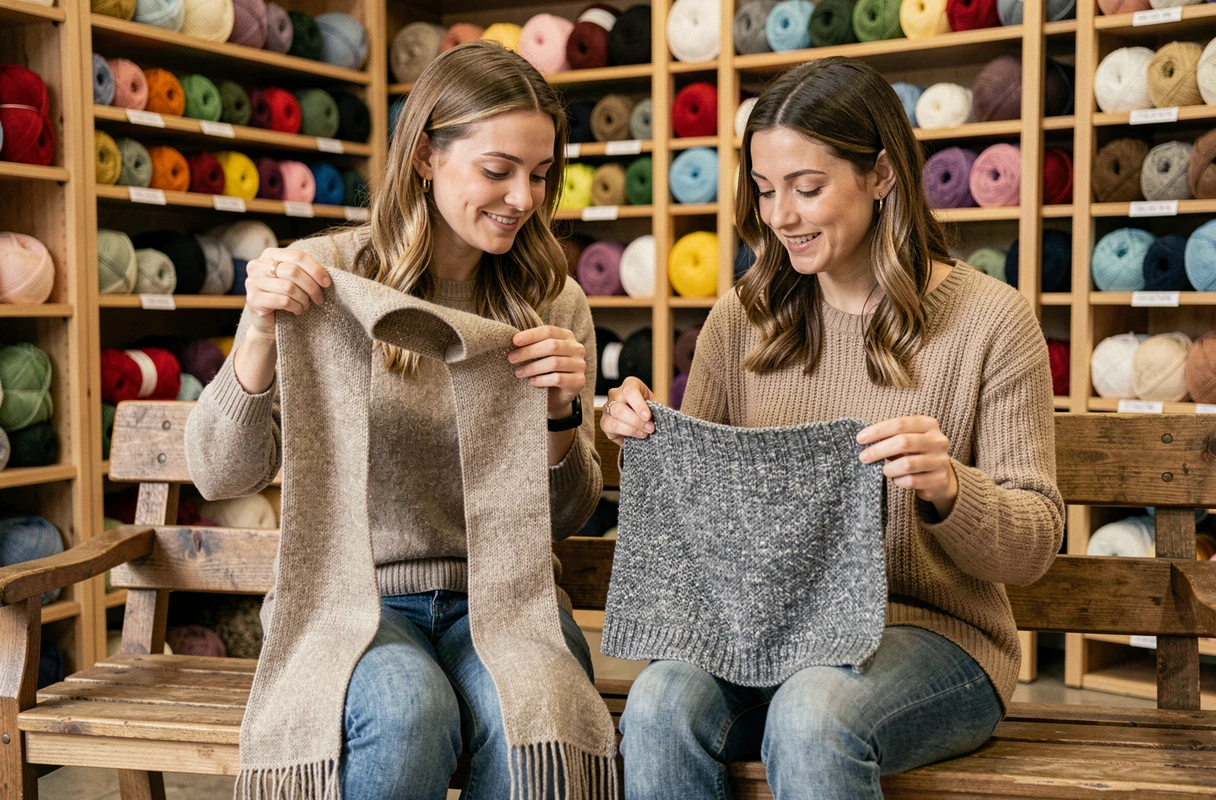
Underestimating the amount of yarn needed is one of the most common problems in scarf projects. Length, width, and stitch density combine to determine the total yarn yardage.
Thick yarn consumes more material per row but allows for a scarf to be knitted in a few hours. A fine yarn significantly extends the time to complete and multiplies the number of skeins needed, even for a scarf of modest dimensions.
Before choosing a pattern, it is better to check the total yardage indicated on the pattern’s sheet and compare it to the yardage available per skein. Online calculators from some yarn brands can help estimate the amount of yarn based on the desired dimensions and chosen stitch.
Adapting dimensions to the available yarn
When the amount of yarn is limited (leftover skeins, gifted yarn), adjustments should be made to the width rather than the length. Shortening a scarf by 20 cm is less noticeable than reducing it by 5 cm in width, where the visual effect is immediate.
Another option is to change the stitch to a more open pattern, such as seed stitch or lace stitch, which consumes less yarn per row while maintaining sufficient width.
The dimensions of a hand-knitted scarf are not limited to a standard measurement chart. The yarn, stitch, wearing style, and body shape form a system where each variable influences the others. Knitting a sample, measuring the obtained width, and simulating a quick knot around the neck before committing to the full length remains the most reliable method to avoid unpleasant surprises.