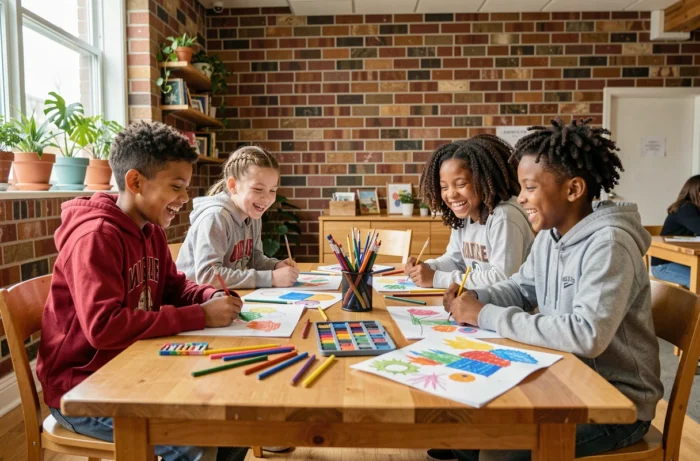
The daily life of children in difficulty is not limited to a lack of toys or activities. We observe on the ground a structural degradation of living conditions affecting housing, health, and education. Offering a better daily life to children through solidarity requires understanding these mechanisms before getting involved.
Housing for children in France: the 2026 barometer figures
The 2026 barometer from the Federation of Solidarity Actors and UNICEF France provides a stark snapshot. On the night of August 18 to 19, 2026, at least 2,355 children were left without housing solutions after a call to 115. Among them, 514 were under three years old.
This figure has been continuously rising since 2022. These are not isolated situations: the lack of stable housing directly jeopardizes educational continuity, medical follow-up, and the psychomotor development of the youngest.
Organizations working in this area, such as those listed on the Sourires D’Enfants website, attempt to compensate for these deficiencies through comprehensive support (school supplies, leisure activities, volunteer presence). Solidarity does not correct the housing shortage, but it mitigates its effects on children’s daily lives.
Capacity of associations and pressure on funding
The Federation of Solidarity Actors published a statement on September 28, 2026, detailing a reality that is rarely covered in mainstream content. In 2025, one in two employing associations reported losing funding. Rising needs on one side, declining resources on the other: the equation is deteriorating.
Recruitment difficulties add to the problem. The nonprofit sector struggles to retain its employees and volunteers, which undermines the continuity of missions with families. A hospitalized child followed by an association that loses its point of contact sees their support interrupted, sometimes without a replacement.
We recommend that donors and volunteers prioritize organizations that publish their accounts and clearly display the allocation of funds. Financial transparency is not a detail: it conditions the sustainability of the impact on children’s daily lives.
What solidarity can concretely cover
Associative action for children is organized around several complementary axes:
- The provision of school supplies and toys, which restores a sense of normalcy for children in precarious situations or hospitalized
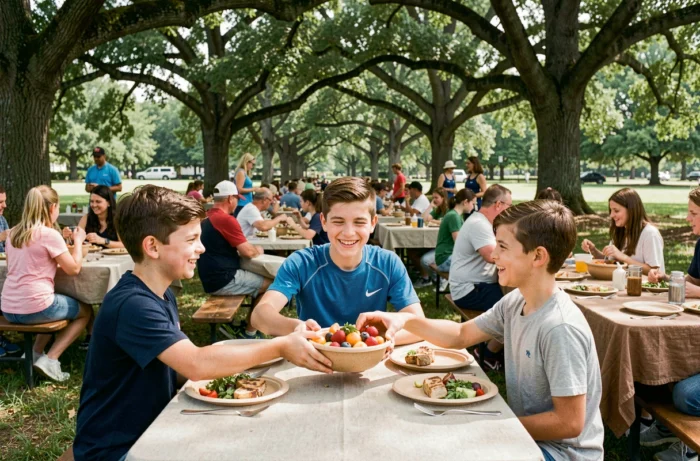
- The organization of collective activities (workshops, outings, family sharing moments) that break the social isolation linked to poverty
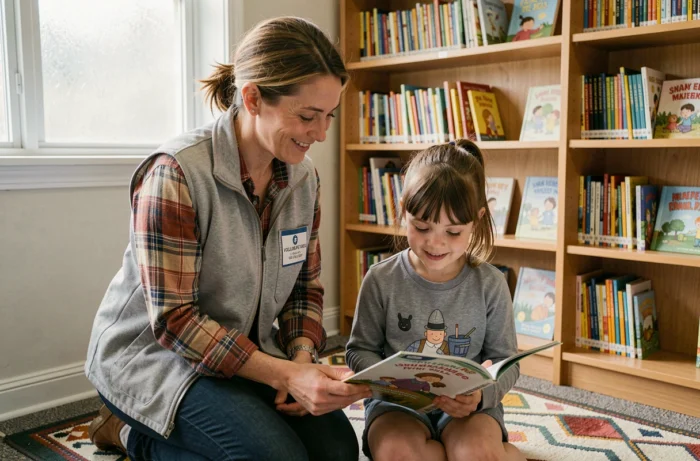
- The regular presence of trained volunteers with hospitalized children, to maintain an emotional and educational bond outside the family circle
- The administrative support for families, which indirectly secures the child’s daily life (access to rights, guidance towards protection systems)
Each of these axes requires stable human resources. A one-time gesture helps, but the regular commitment of volunteers makes a difference over time.
Family precariousness and access to leisure: an underestimated angle
When essential expenses (housing, food, energy) consume almost all income, leisure and shared family time disappear first.
For a child, the elimination of extracurricular activities does not just result in boredom. It reduces social interactions, limits the development of non-academic skills, and reinforces feelings of exclusion compared to better-off peers.
Contributing without infantilizing
Organizations working in this field do not simply distribute materials. The best among them co-construct activities with families to preserve their autonomy. The beneficiary child is not a passive recipient of solidarity: they participate, choose, and express themselves.
This approach changes the very nature of the act of solidarity. Giving a toy to a hospitalized child does not have the same impact if it is chosen randomly or selected based on their tastes, age, and medical situation. Volunteers trained in this logic produce a measurable effect on the well-being of the children they support.
Becoming a volunteer or donor: criteria for choosing a childhood association
Not all organizations are equal. Before getting involved, we recommend checking several points:
- The annual publication of accounts and activity reports, which allows for measuring the real impact of missions
- The ratio between operating costs and funds directly allocated to children, an indicator of operational efficiency
- The existence of a volunteer training program, a guarantee of quality in support
- The diversity of proposed missions (hospitalized children, families in emergency housing, educational support) which reflects a comprehensive vision of the child’s daily life
A tax-deductible donation mechanically amplifies the action capacity of the chosen association. Some organizations offer sponsorship arrangements that finance support over several months rather than a one-time gesture.
Solidarity towards children cannot be decreed by a slogan. It relies on solid structures, trained volunteers, and stable funding. In a context where needs are increasing and resources are contracting, every sustainable commitment counts more than a multiplication of one-time gestures.