
The Morbihan presents a rental market that is structurally segmented between heritage coastal areas and urban centers with high yields. Understanding this segmentation allows for calibrating a rental real estate investment in Morbihan according to a specific goal: cash flow, long-term appreciation, or a mixed approach.
Lorient’s crown effect: inter-municipal yields to exploit
Most analyses on Morbihan stop at Lorient intra-muros. We observe that the real opportunity lies in the first crown of the agglomeration, where prices per square meter remain low and rental demand is strong.
Quimperlé shows a gross yield of 6.5%, Lanester reaches 6.1%, and Hennebont stands at 5.9%, based on DVF data cross-referenced with market rents. These municipalities benefit from the Lorient employment pool (maritime, defense, agri-food) without bearing the land pressure of the city center.
The entry price for a T2 or T3 remains significantly more accessible than in Lorient itself. For those looking to invest in rental real estate in Morbihan with a yield objective rather than capital gains, these municipalities deserve a thorough analysis of the existing stock, particularly regarding condominiums from the 1970s to 1990s that offer generous spaces for renovation.
Lanester has an additional advantage: its immediate proximity to the center of Lorient via the bridge, making it attractive for active tenants seeking moderate rent without sacrificing access to urban services.

Yield versus asset appreciation: Lorient facing Vannes
This point constitutes the structural decision for any investor in the department. Lorient and Vannes embody two opposing logics that must be clearly defined before signing.
Lorient: the highest gross rental yield in Morbihan
Lorient concentrates the best yields in the department, between 5 and 8.5% gross depending on the strategy and neighborhood. The average price is around 2,650 to 2,720 euros per square meter, which leaves a positive cash flow margin even with traditional bank financing.
The rental profile is diverse: students, military personnel on the move, employees in the maritime sector. This diversity reduces the risk of vacancy. We recommend targeting neighborhoods close to the train station and the commercial port, where demand remains constant throughout the year.
Vannes: asset security and liquidity at resale
Vannes positions itself with a more moderate yield, between 5 and 6% gross, but offers superior liquidity at resale compared to any other city in the department. The Vannes market is a capitalization market, not a cash flow one.
The price per square meter is significantly higher than in Lorient. An investor aiming to build wealth over ten to fifteen years and accepting a lower current yield will find a safe haven in Vannes.
Pontivy and the Denormandie scheme: minimal entry ticket
Pontivy stands out with an atypical positioning in Morbihan. Gross yields reach 8 to 10%, driven by some of the lowest acquisition prices in the department.
Eligibility for the Denormandie scheme enhances the fiscal appeal for taxed investors. The tax reduction applies to older housing requiring renovations representing at least 25% of the total cost of the operation. For a property to be renovated in Pontivy, this threshold is often naturally reached given the condition of the available stock.
- Accessible entry ticket: a T3 of 60 m² is negotiated significantly below the prices practiced on the coast, which limits the necessary personal contribution
- Rental demand driven by local public services (hospital, administration) and by a working population that finds it difficult to find housing in the existing stock
- Identified risk: liquidity at resale is lower than in coastal markets, which imposes a long investment horizon
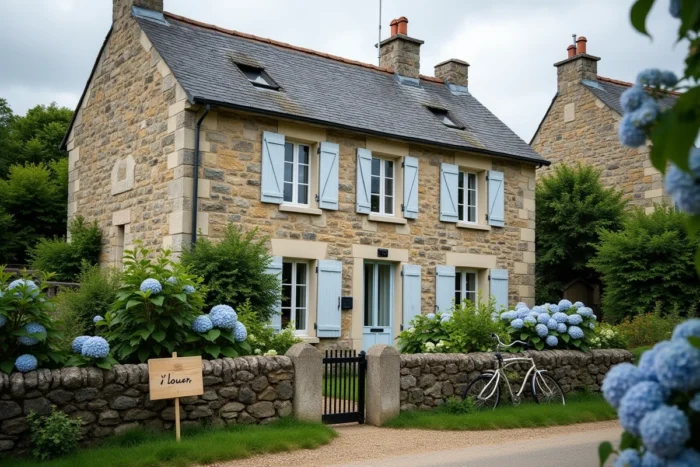
Coastal municipalities of Morbihan: seasonal non-professional furnished rentals and their limits
Séné, Sarzeau, and the municipalities of the Gulf of Morbihan attract investors in non-professional furnished rentals for seasonal purposes. The income potential in high season is real, driven by significant tourist traffic in the department.
We find that many investors underestimate three constraints in this segment:
- Municipal regulations on tourist rentals are tightening, with limitations on the number of rental days in several Breton coastal municipalities
- Seasonality creates a structural vacancy of four to five months, which reduces the actual annualized yield well below optimistic projections
- Condominium and seasonal management charges (cleaning, laundry, platform) significantly reduce net profitability compared to a classic unfurnished rental
- The acquisition price per square meter on the coast remains high, which mechanically compresses the gross yield
This segment is suitable for an investor seeking a mixed use (second home and supplementary income) rather than pure rental yield.
Framework for choosing an investment city in Morbihan
The choice of city depends on the investor’s asset goal and tax profile. Three criteria allow for quick decision-making.
The target gross yield determines the geographical area. Above 6%, one should position themselves in Lorient, its crown, or Pontivy. Below that, Vannes and Auray offer better resale security.
The level of taxation guides towards the appropriate tax scheme. The Denormandie in Pontivy or the LMNP on the coast do not respond to the same optimization logics. An investor in a high marginal tax bracket will benefit more from the Denormandie than a first-time investor with low taxation.
The ability to manage or delegate property management also weighs in. A long-term unfurnished rental in Lorient requires little intervention. A seasonal furnished rental in Sarzeau demands active management or a mandate that burdens net profitability.
Morbihan remains a department where yields above the national average coexist with accessible entry prices. The key lies in the alignment between the chosen city and the defined asset strategy.